

INTRODUCTION
This project on designing an innovative shoe rack was a significant endeavour undertaken in the ES 201 Design and Innovation course, supervised by Professor Manasi. The aim was to revolutionize conventional footwear storage solutions, especially focusing on the needs of middle-income Asian users aged 35 and above who faced challenges due to musculoskeletal issues.

The Problem
The glorious nature of shoes is that there are so many styles! But that variation in style, heel height, and shape (i.e., boots versus flip flops) means different shoes require different storage solutions. Some shoe racks work for sandals but not boots and high heels; some people need help organising them in a small closet.
The need for shoe racks in a household or workplace has become somewhat of a necessity in today’s modern generation. The number of shoes a person owns has dramatically increased, and the need for a tidy, organized environment cannot be achieved when shoes are scattered all over the floor. Due to usability issues in existing conventional shoe rack designs that can lead to the users sustaining certain types of musculoskeletal injuries, I decided to work on this problem.
The few constraints for the Asian middle-income group users are:
Space: As it is kept at the doorway, it should only occupy a little space.
Bending: People with back pain have problems retrieving footwear.
Hygiene and proper ventilation: Footwear needs to be kept clean and odour-free.
User Profile
Age: Above 35
Sex: All Genders
Economic background: Asian, middle-income family
Environment and Context
Mostly placed near the entryway
Either inside or outside the door in open
Users mostly approach the footwear rack 2-4 times a day
User Interviews
The user research involved diverse interviews conducted with individuals from different backgrounds consisting of homemakers, professionals, retirees, and various occupations aged 35 and above. These interviews explored preferences and challenges related to footwear storage. The insights gathered from homemakers, professionals, retirees, and various occupations form the foundation for creating an ergonomic and personalized footwear storage solution.
Hygiene & Organization Preferences:
Users exhibited varied preferences for open or closed racks based on quick access and hygiene concerns.
Placements differed among users: some favoured entrance locations for cleanliness, while others chose main halls or balconies for convenience.
Storage Capacity:
Users stored different quantities, ranging from 4 to 25 pairs, comprising various types of footwear suited for different occasions.
Users need a place to store socks, polish, brushes, etc.
Material & Design Preferences:
Material choices were diverse, with a collective preference for durable, rust-free options like wood for aesthetics and longevity.
Design preferences ranged from simplicity to complexity, focusing on rack identification and distinct tier visibility.
Users needed a place to wear footwear comfortably.
These were the interview questions:
Does your footwear rack look unhygienic, messy, and unorganized?
Is there any bad odour emanating from the footwear or rack?
Do you prefer an open or closed footwear rack?
Where do you usually place your footwear rack?
Approximately how many pairs of footwear do you store?
What types of footwear do you typically own?
What problems do you face with your current footwear storage?
Do you face difficulties accessing footwear from the bottom tier?
How many tiers do you prefer in a footwear rack?
Can you distinctly see all your footwear pairs on the rack?
Do you need a place to sit near your footwear rack for wearing and removing footwear?
Are there any other specific problems you face related to footwear storage?
What material would you prefer for your footwear rack?
How frequently do you encounter your footwear rack in a day?
Do you find footwear racks in the market expensive based on your needs?

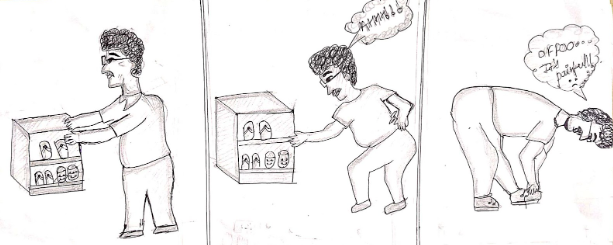
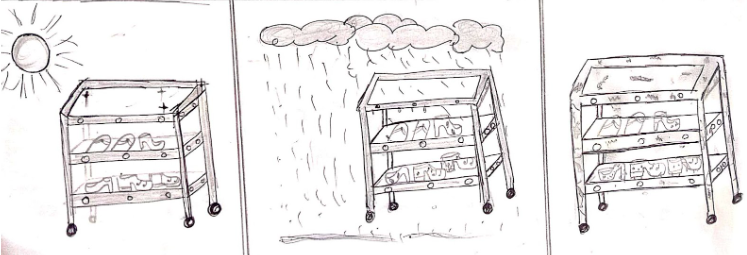
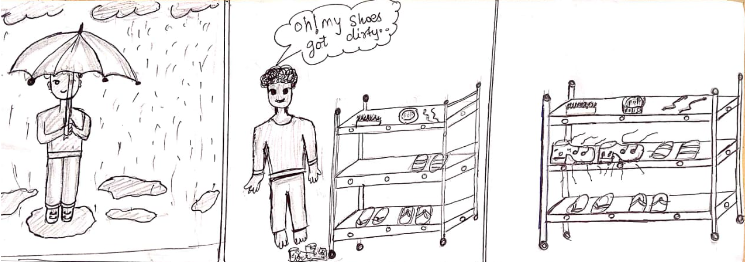
Storyboarding
Pain-points and Design Opportunities
Aged people face problems in bending while taking their footwear out of the rack.
A compact design suitable for Asian countries where it is cultural to remove footwear before entering the house. Ways to make it ideal for placement by the doorway.
Difficulty in viewing/obtaining/storing footwear from the bottom tier.
Open storage can be unhygienic and viewed as unorganized.
Bad odour and wet footwear during the rainy season.
Open footwear rack faces problems of being wet and dirty in bad weather.
Lack of shoelace tying/untying provision.
The colour of racks fades after exposure to the sun for a long time or getting rust and termites.
No space for footwear-related things (shoelaces, socks, brushes, sponges, polish, etc.)
Transportability Problem

Concept Development
Brainstorming ideas individually for four major pain points.
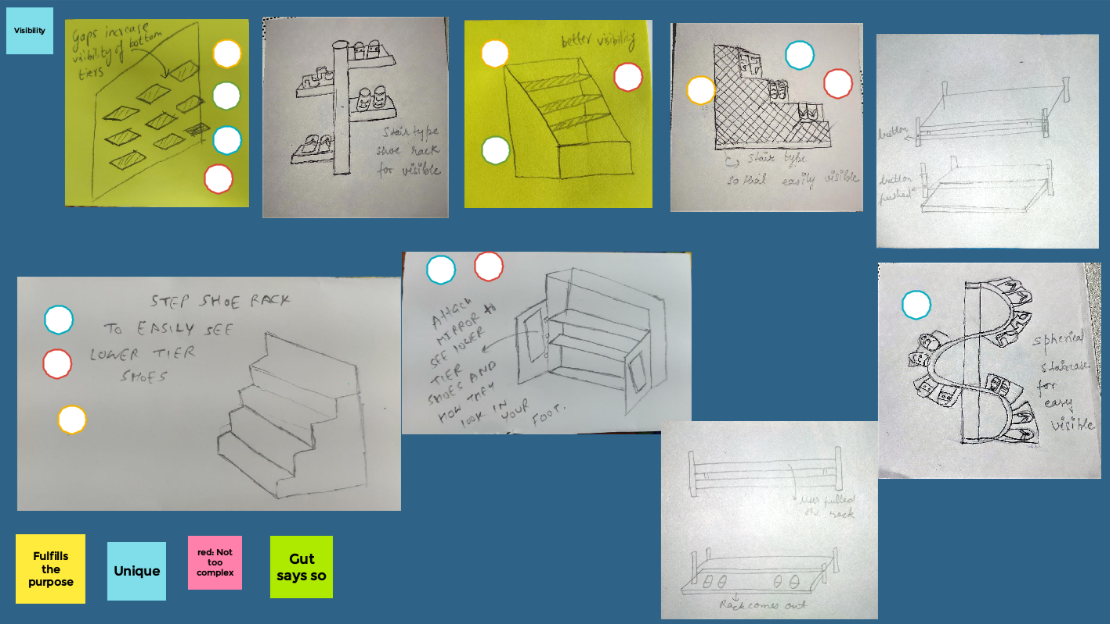
For Visibility
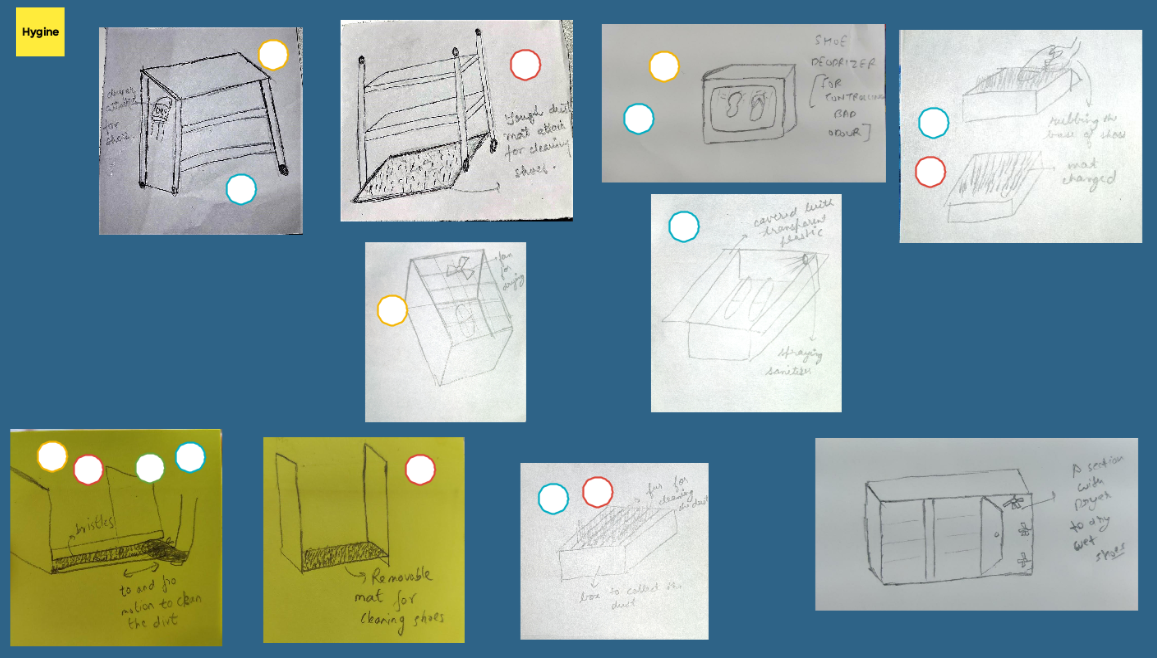
For Hygiene
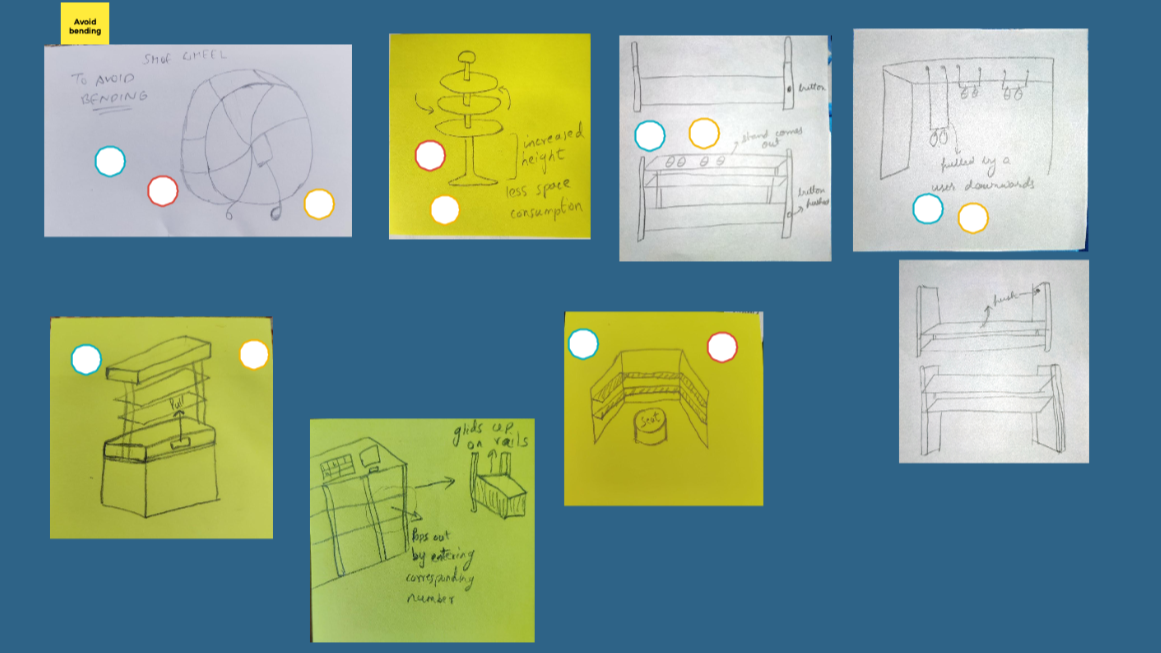
To Avoid Bending
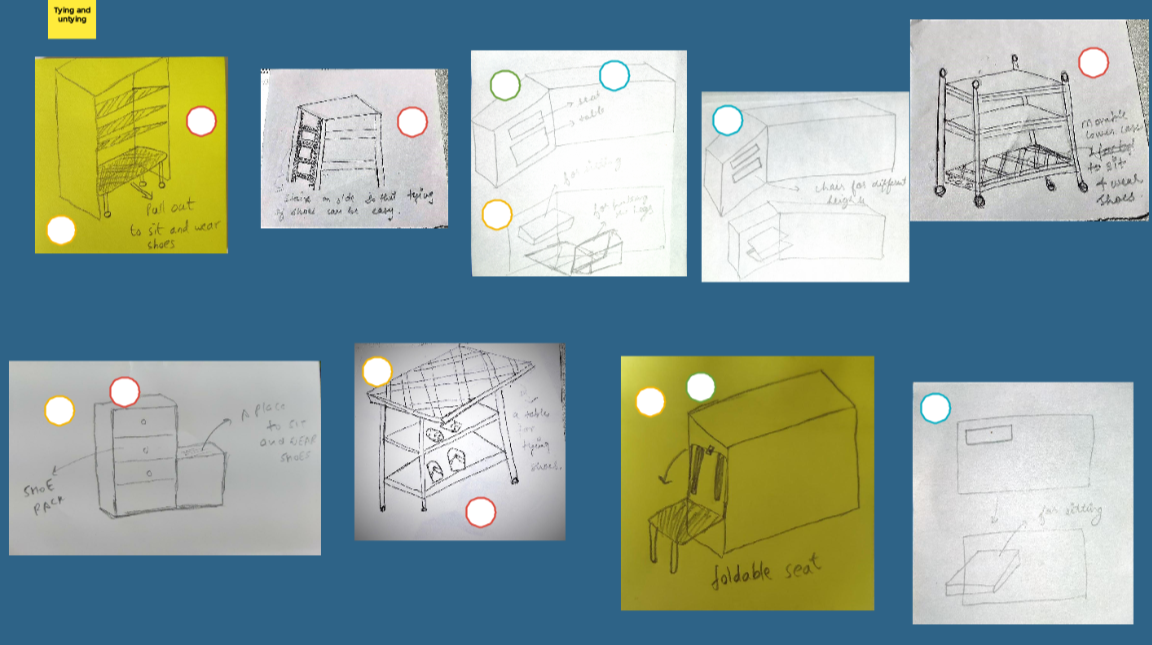
To Provide Seat
Final Consolidated Concepts
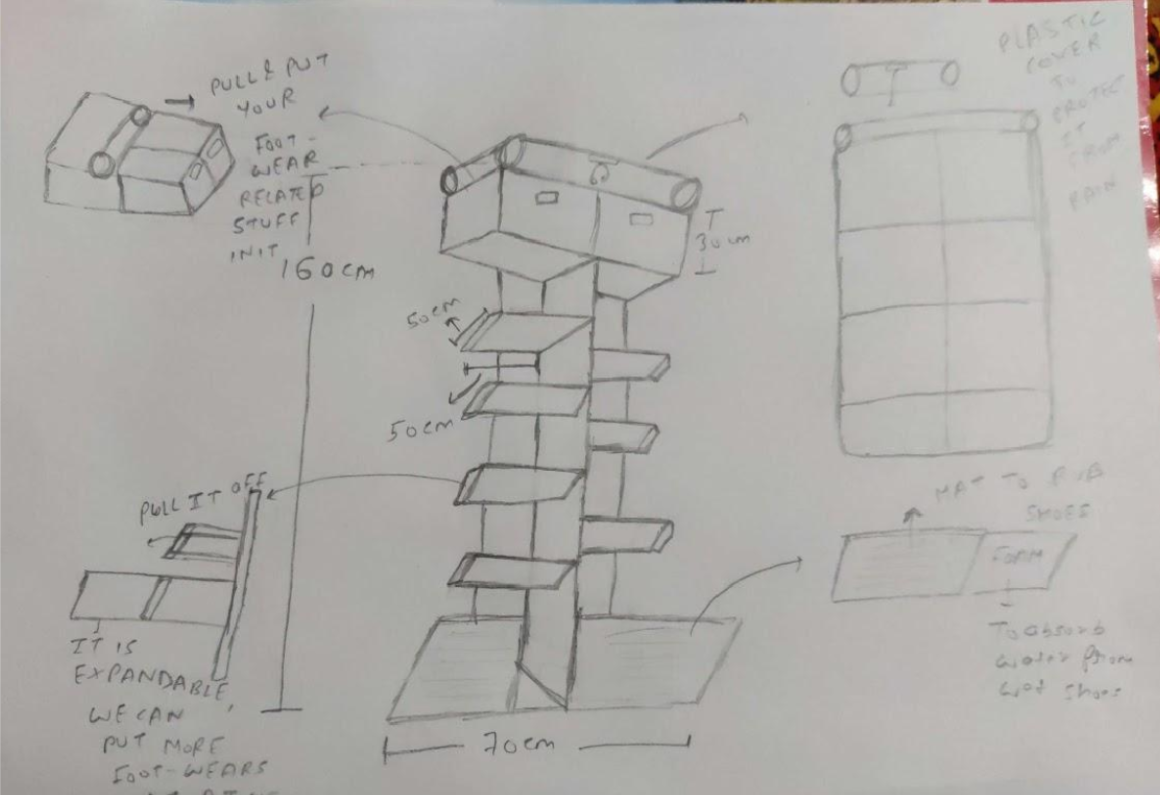
Single racks for holding individual pairs and zig-zag arrangement improve visibility.
Storage for socks and shoe care products.
Cover for protection from dust when kept outdoors.
The tall structure avoids bending for most of the racks.
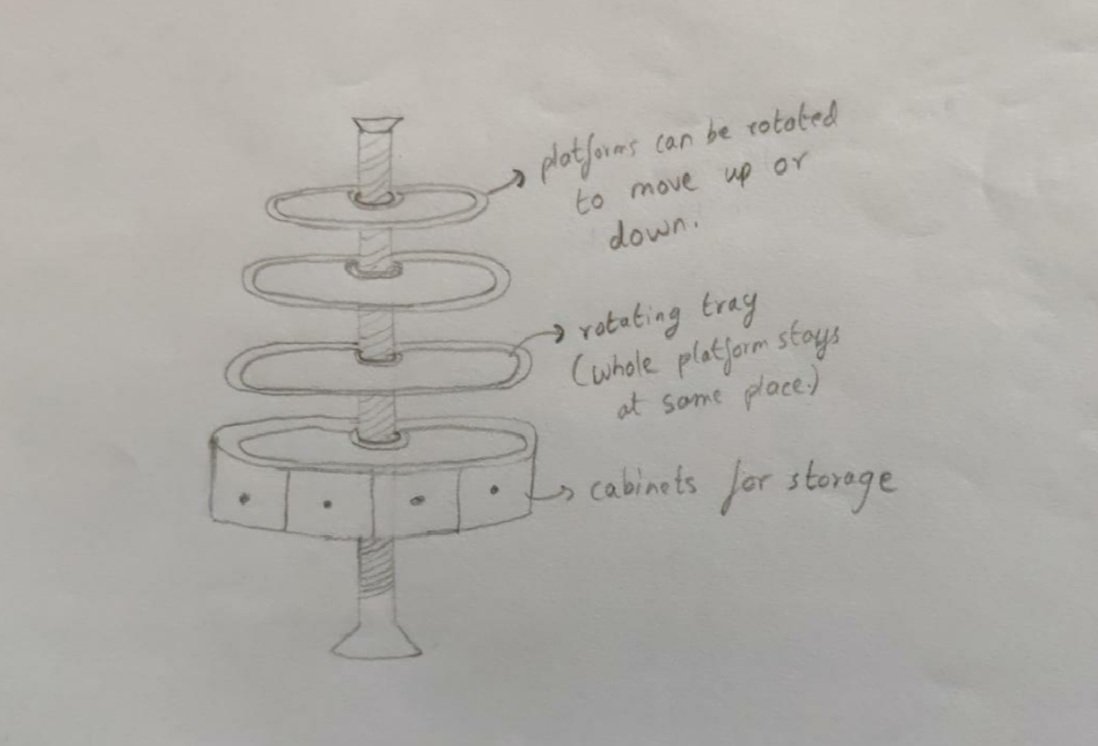
Rotating tray on each platform for easy visibility.
Platforms can be moved in the vertical direction by rotating on the shaft(like a nut-bolt).
Cabinets for storage.
Tall structure to avoid bending.
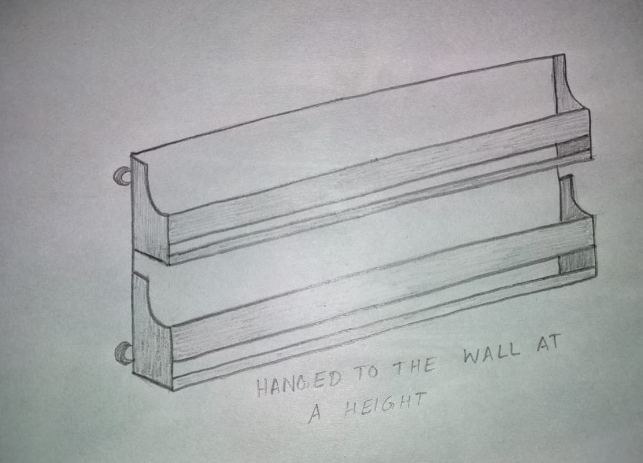
Wall mounted at an optimum height to avoid bending.
All pairs can be directly seen at once,
Open rack ensures proper ventilation.
Less space-consuming.